
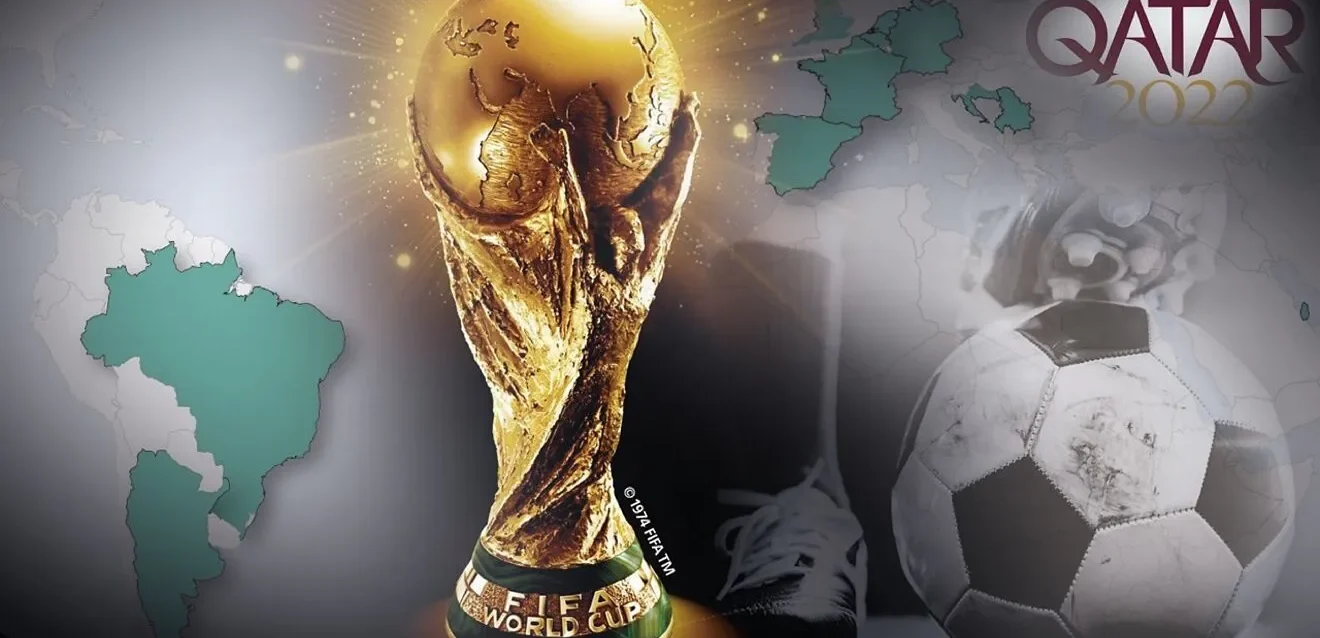
With only a few days to go before this great event, the public's expectations are not as high as they have been in past World Cups and sponsors must calculate their moves very well as they are part of a highly criticized organization.
As every 4 years -this time a little more because of the selection of the venue- the great world celebration of men's soccer is celebrated, an event that, for a whole month, keeps fans on the lookout for the World Cup, either because their country got one of the 32 places available, or simply because they like the sport and want to be entertained in this edition that runs from November 20 to December 18.

However, the excitement is not as great as one might think, due to some aspects isolated to the sport, but with great impact worldwide, such as the decision in the selection of the venue (Qatar) that was full of controversy and that 12 years later the former FIFA president, Joseph Blatter shared the following: "For me, it is clear: Qatar is a mistake. It was a bad decision. His assertion goes hand in hand with the more than 6,000 deaths of employees who worked hard to get those stadiums that look like first world stadiums ready, plus the violation of women's rights, plus the attacks on the LGBTIQ+ community, as well as the non-existence of freedom of press and expression, are factors why many people are against the event.
Brand reputation
Among FIFA's seven main partners are Adidas and Coca-Cola, both brands under contract until 2030. On the one hand, the German brand, whose main figure is Lionel Messi, has played a very discreet role, focusing on displaying the ball that will roll on the field, called Al Rihla, as well as the jerseys of teams such as Mexico, Argentina, Spain, Japan, Belgium and Germany itself. On the other hand, the soft drink giant that has been with FIFA since 1974, true to its style, launched a video showing a woman who, while drinking her soft drink, looks up and imagines a scenario where people share their emotions with others through soccer.
But these brands are not turning a blind eye, along with McDonalds and together with McDonalds and Budweiser expressed their support for the request for reparations to the workers and urged FIFA to develop a compensation plan, according to the NGO Human Rights Watch. In this way they continue to sponsor the event, and at the same time contribute to the cause that has affected thousands of people. This shows that it is possible to maintain commercial ties with an organization involved in controversy without damaging the image of its brand to the world.

The other side of the coin
Although it may not seem like it to many, it could be mentioned that it is not an obligation to support different causes, there are brands that simply have a set objective and only focus on fulfilling it. Wanda Group, the world's largest real estate company, and KIA/Hyundai, the South Korean car manufacturer, are two other official FIFA partners, who have not commented on the controversy and have decided to continue with their different activities. Visa, Qatar Airways and Qatar Energy make up the group of 17 World Cup sponsors that will provide the organization with a little more than 1.2 billion euros in sponsorship. A great business model that breaks with all the schemes edition after edition, criticized by many, but quite profitable for others.
Valid or not, they are brands that, regardless of their actions, provide clear examples in the event of finding themselves in a similar situation. It is up to us and our interests how we handle ourselves and the image we want to leave for posterity, because the present is probably the most important thing, but the long term is something we should not lose sight of.